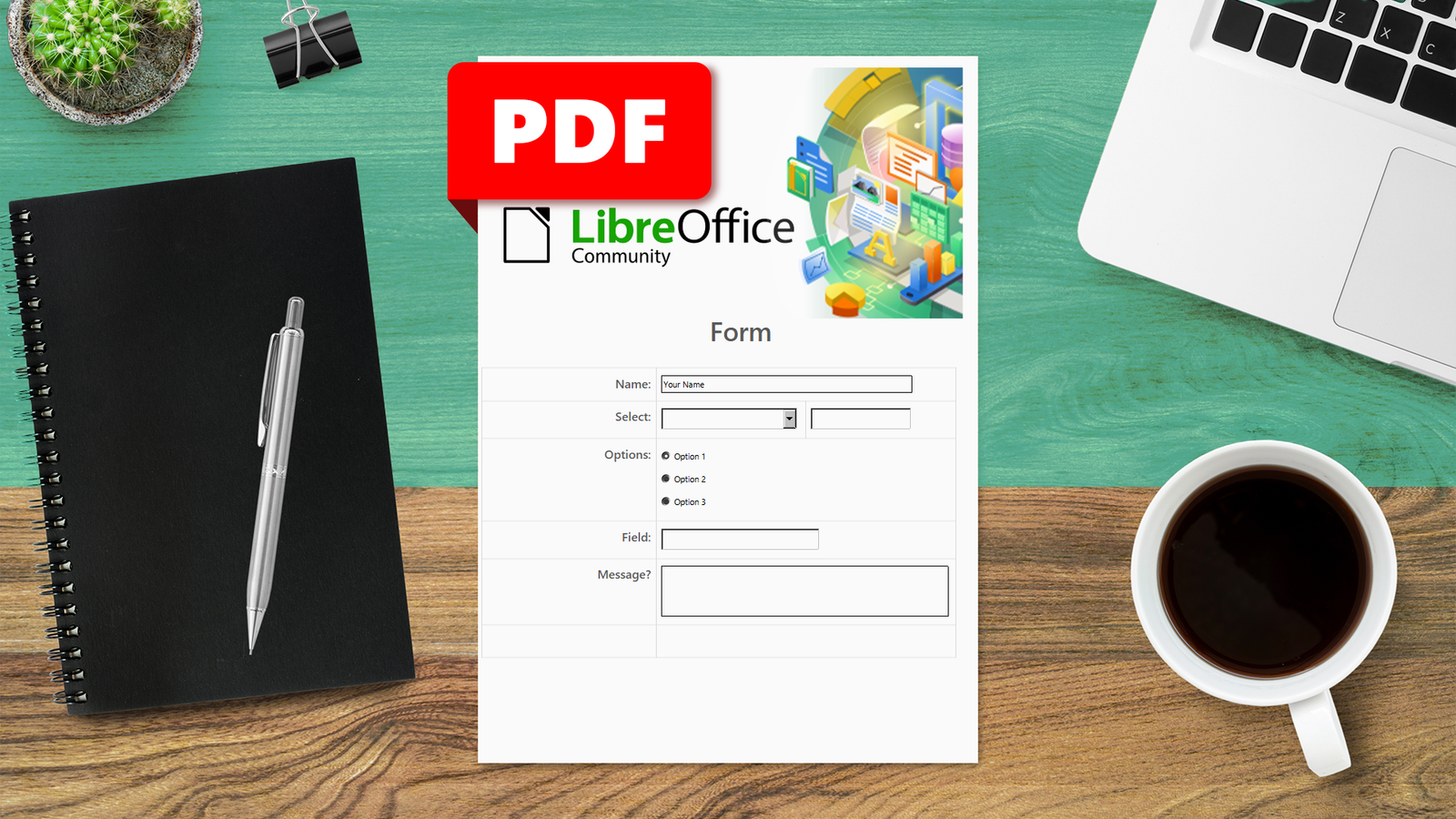
Streamline LibreOffice PDF: Mastering Form Formats and Export Standardization
In today's digital landscape, the ability to generate well-structured, accessible, and compliant PDF documents is paramount. LibreOffice, a powerful open-source office suite, offers robust PDF export capabilities, but navigating its various options can be perplexing for new and experienced users alike. From ensuring documents are suitable for long-term archiving to creating interactive forms that integrate seamlessly with different systems, understanding these nuances is crucial for optimizing your workflow and achieving a truly effective
21 Para Pdf output – one that's optimized for modern demands and efficient processing. This guide delves into LibreOffice's PDF export settings, form formats, and strategies for standardization, providing the insights you need to harness its full potential.
Decoding LibreOffice PDF Export Options: PDF/A-1a vs. Tagged PDF
When exporting documents to PDF from LibreOffice, you're presented with a range of choices that significantly impact the final document's properties. Two options often cause confusion are "PDF/A-1a" and "PDF marcado" (Tagged PDF). While both enhance a PDF's functionality, they serve distinct purposes.
PDF/A-1a: The Archival Standard
The "A" in PDF/A stands for Archival. PDF/A-1a is an ISO standard specifically designed for the long-term preservation of electronic documents. Its primary goal is to ensure that a PDF document can be faithfully reproduced exactly as it appeared at the time of its creation, regardless of future technologies or software. To achieve this, PDF/A-1a documents are self-contained. This means they embed all necessary fonts, color profiles, and other external content directly within the file. Crucially, they prohibit elements that could hinder long-term preservation, such as embedded multimedia, JavaScript, or external links. The "1a" part of the standard refers to its conformance level, where 'a' indicates full accessibility (incorporating structural information). Choosing PDF/A-1a is ideal for documents that need to be legally compliant for archiving, such as invoices, legal contracts, or public records, ensuring their integrity and readability for decades to come.
Tagged PDF: Enhancing Accessibility
"PDF marcado," or Tagged PDF, focuses on accessibility and structural integrity, primarily for users with disabilities or for advanced document processing. A Tagged PDF includes a logical structure tree that defines the reading order and identifies elements like headings, paragraphs, lists, tables, and images. This tagging enables assistive technologies, such as screen readers, to interpret and present the document's content meaningfully to visually impaired users. It also allows for dynamic reflow of content when viewed on different screen sizes or devices, providing a better reading experience. While PDF/A-1a has an accessibility component, Tagged PDF's core strength lies in its ability to explicitly define document structure. For organizations striving for WCAG (Web Content Accessibility Guidelines) compliance or those needing to convert PDFs into other formats while preserving structure, Tagged PDF is the go-to choice.
For a deeper dive into these formats and their implications for your workflow, explore our related article:
LibreOffice PDF Export: A-1a vs. Tagged & Formats Explained.
Navigating PDF Form Formats: FDF, PDF, HTML, and XML
LibreOffice offers the capability to create interactive PDF forms, a powerful feature for data collection. When setting up a PDF form, you'll encounter four distinct options for sending the submitted data: FDF, PDF, HTML, and XML. Each serves a specific purpose in how form data is transmitted and processed.
FDF (Forms Data Format)
FDF is a lightweight file format specifically designed for exporting and importing data from PDF forms. It contains only the form field data, not the entire PDF document itself. This makes FDF files extremely small and efficient for transmitting user input. When a user fills out a form and submits it as FDF, only the data they entered is sent, which can then be used to populate other PDF forms or databases. It's an excellent choice when you have a pre-existing master PDF form and simply need to collect the submitted data efficiently.
PDF (Portable Document Format)
When you choose PDF as the submission format, the entire filled-out PDF document is sent. This means the original form, along with all the data entered by the user, is transmitted as a single, self-contained PDF file. This option is useful when you need a complete record of the filled form, exactly as the user saw and completed it, including any styling or layout. It's less efficient for pure data extraction but provides an unalterable visual record.
HTML (Hypertext Markup Language)
Submitting form data as HTML means the data is sent in a format commonly used for web pages. When selected, the form data is typically posted to a web server as part of an HTTP request. This method is highly versatile for integration with web-based applications and databases. It allows for server-side processing using common web technologies (like PHP, ASP.NET, Node.js), making it a popular choice for public-facing forms or when integrating with existing web infrastructures.
XML (Extensible Markup Language)
XML is a highly structured, machine-readable format for data exchange. When form data is submitted as XML, it's organized with tags that define the nature of each piece of information. This format is ideal for integrating with other enterprise systems, databases, or applications that rely on structured data. XML ensures data integrity and makes it easier for automated systems to parse, validate, and process the submitted information. It's particularly valuable in business-to-business (B2B) workflows or complex data management scenarios where precision and automation are key.
Choosing the right form format depends entirely on your specific workflow and integration needs. Consider where the data needs to go and how it will be processed to make the most informed decision.
Standardizing Your LibreOffice PDF Exports: Profiles and Best Practices
Consistency is key, especially in professional environments where documents need to adhere to specific standards, whether for branding, compliance, or accessibility. The question of whether it's possible to create and distribute export profiles for LibreOffice to standardize PDF generation across multiple workstations is a common one. While LibreOffice doesn't offer a direct "export profile" feature like some specialized PDF tools, there are several effective strategies to achieve standardization.
Leveraging Document Templates
The most straightforward method is to create and distribute document templates (.ott files) with pre-configured PDF export settings embedded. While the direct export settings aren't stored *in* the template file itself in an easily distributable manner for the *export dialog*, you can standardize other aspects that influence the PDF, such as fonts, page styles, and embedded objects. For true export standardization, users must be trained on the correct export steps and settings.
Manual Configuration & User Training
For many organizations, the most practical approach involves documenting specific PDF export procedures and training users. Create a step-by-step guide outlining which options to select for different types of PDFs (e.g., PDF/A-1a for archival, Tagged PDF for accessibility). This ensures that every user understands the expected output.
Macros for Automated Export
For advanced users or specific workflows, LibreOffice macros (written in Basic or Python) can automate the PDF export process with predefined settings. A macro can programmatically select options like PDF/A-1a, compression levels, and form submission formats, then trigger the export. These macros can be distributed as part of a LibreOffice extension or integrated into document templates. While requiring some technical expertise, this offers the highest level of control and consistency.
Default Settings and Configuration Management
On a technical level, some default PDF export settings can be influenced through LibreOffice's configuration files. For large deployments, IT administrators might explore deploying pre-configured LibreOffice installations or pushing specific configuration changes that align default settings closer to organizational standards. However, this method requires careful testing and is generally more complex than user training or macros.
When aiming for complete standardization, one often faces up to 21 distinct choices or parameters that need careful consideration in the export settings for a truly optimized
21 Para Pdf output. From embedding fonts to image compression and security settings, each option contributes to the final document's integrity and usability. Mastering these settings ensures that every PDF generated from LibreOffice adheres to your organizational best practices, critical for internal efficiency and external compliance. For comprehensive guidance on specific LibreOffice PDF export settings, refer to our article
LibreOffice PDF Export: A-1a vs. Tagged & Formats Explained.
Advanced PDF Solutions: Beyond LibreOffice Export
While LibreOffice provides excellent foundational PDF export capabilities, there are scenarios where more specialized tools are required. For high-volume document processing, advanced compression, or sophisticated OCR (Optical Character Recognition), enterprise-grade solutions offer capabilities that go beyond standard office suites.
CVISION's PdfCompressor, for instance, is one such product that addresses these advanced needs. It specializes in reducing PDF file sizes significantly without compromising quality, making documents easier to store, transmit, and manage. Beyond mere compression, PdfCompressor also excels in OCR, transforming scanned documents into fully searchable PDFs. This is invaluable for digitizing vast archives, improving document searchability, and enabling text extraction for data analysis.
Organizations dealing with large quantities of legacy paper documents, requiring strict compliance with digital archiving standards, or facing network bandwidth constraints due to large file sizes, often turn to solutions like PdfCompressor. It provides a robust framework for managing digital documents at scale, ensuring they are optimized for storage, retrieval, and accessibility.
For organizations looking to go beyond standard exports, especially those dealing with high volumes or seeking specialized regional support (e.g., in areas like those identified by the '21' dial code in Portugal), understanding advanced solutions for
21 Para Pdf challenges becomes critical. For tailored support and to explore how CVISION PdfCompressor can benefit your specific operational needs, you might contact authorized resellers. For instance, in Portugal, Laserdata, Lda. can be reached at 21 487-2002 or via email, exemplifying how localized expertise is available to address complex document management requirements. Discover more about how advanced tools can elevate your PDF strategy in our dedicated article:
CVISION PdfCompressor: Advanced PDF Conversion and OCR.
Conclusion
Mastering the PDF export options in LibreOffice is a powerful step towards streamlined document management. Understanding the distinctions between PDF/A-1a for archiving and Tagged PDF for accessibility ensures your documents meet critical standards. Similarly, choosing the correct form submission format ��� be it FDF, PDF, HTML, or XML – is vital for efficient data collection and system integration. By implementing standardization strategies, whether through user training, templates, or macros, organizations can ensure consistency and compliance across all their LibreOffice-generated PDFs. And for those facing high-volume, advanced optimization, or specific regional challenges, specialized solutions like CVISION PdfCompressor provide the extended capabilities needed to transform complex document workflows into efficient, searchable, and manageable processes. Embracing these insights empowers you to generate not just any PDF, but an optimized
21 Para Pdf output tailored for the demands of the modern digital era.